
Freethought-Now

An investigation of a near-death experience
I participated in a panel at the annual conference of the Society of Biblical Literature (jointly with the American Academy of Religion) in Boston in November, 2025. Sponsored by the Evangelical Philosophical Society, the event included readings from Debating God’s Existence: Believers and Skeptics in Friendly Conversation (Eerdmans, July 2026), a book based on a 2022 “Does God Exist?” debate between myself and theologian/philosopher Adam Lloyd Johnson, founder and president of Convincing Proof.
The Boston panel included atheists (Dan Linford, Benjamin Watkins and me) and theists (Robert Koons, Adam Lloyd Johnson and book editor Andrew Drinkard), as well as the affable, well-known evangelical theologian and author Paul Copan, who wrote the foreword. The discussion, like the book, was friendly and cordial, emphasizing the importance of sound reasoning and evidence.
During audience questions, someone asked Paul Copan about the coherence of the concept of an immaterial mind. Paul replied with an amazing near-death-experience (NDE) story about a woman who came out of a coma and said she had had an out-of-body experience (OBE) and was floating near the ceiling of the hospital room and had seen a 12-digit number on top of a tall respirator. They wrote down the number, and sure enough, when a worker climbed up there, he saw that it was the same number! That is one solid piece of evidence, he said, that a mind or soul can exist outside of the physical body. There are many accounts like that, he claimed.
I was astonished to hear such an incredible story. If true, we will have to adjust everything we think we understand about consciousness and the physical world. After the event, I emailed Andrew Drinkard to request if he could ask Paul Copan for further details, and Andrew responded:
Paul said you can find documentation of this particular twelve-digit instance in On the Resurrection: Evidences (B&H Academic) by Gary Habermas. Gary also has a larger section on Near-Death Experiences therein, but here is the relevant portion in the document attached.
The attachment was from the end of Habermas’s book in a section titled “Additional Evidential NDE Corroboration,” which begins with these words:
[T]he major criterion for the NDE accounts included in the volume was that each episode must have been “directly confirmed by at least one other person.” . . . Along with several additional cases not previously mentioned so far, this would bring our total evidenced count from this essay alone to between 300 and 400 corroborated NDE cases across a wide variety of types and subtypes.
This is bold. We all know there have been thousands of NDE reports all over the world. These mental experiences are not surprising—a dying brain goes through a lot of stress—but they are just stories. They haven’t been proved to point to anything outside the mind. However, here, Habermas claims, are hundreds of “corroborated” cases that have been “directly confirmed.” This goes beyond mere anecdotes—this is independent evidence that can be investigated external to the person. As an example, Habermas writes about the 12-digit number that Copan mentioned:
Another NDE patient who had suffered a cardiac arrest also related that she “had observed the room from above.” In the process she noted a long, twelve-digit number listed on top of a high medical machine beneath her, and, suffering from obsessive-compulsive disorder, memorized the number and repeated it to the nurse and others there, who wrote down the figure. When the patient no longer required the machine, a custodian set up a ladder in order to dust the top and then moved it out. The twelve-digit number was repeated and it was the same figure that the witnesses had originally written down from the NDEr.78 Later a nurse verified the story once again, stating that this incident was one of the most incredible occurrences that she had ever witnessed.79 [Footnotes: 78 Rivas, Dirven, and Smit, Self Does Not Die, Case 2.5 (35–36); and 79 As confirmed in an interview afterward.]
This is interesting, but Copan has simply directed me to a secondary source. Neither he nor Habermas seems to have investigated it directly. Needing to dig deeper, I ordered the book Habermas lists as his source—it is actually called The Self Does Not Die. Before it arrived, I decided to see what else I could learn.
A journalist reports the story
I discovered that the 12-digit story has indeed been written about independently, and by a journalist—no less. In the 2014 book The Death Class: A True Story About Life, published by Simon & Schuster, the author Erika Hayasaki is identified as an award-winning journalist who “spent nine years as a reporter for the Los Angeles Times before becoming an assistant professor in the Literary Journalism program at the University of California, Irvine.” Respecting her profession, I bought the book, eager to find the corroborated and directly confirmed account of the 12-digit-number story that Copan and Habermas offer as evidence for immaterial minds.
Erika’s lively book is about a registered nurse named Norma Bowe who teaches a popular course called “The Death Class” at Kean University. On page 11, Erika tells this story:
To emphasize that point, [Norma Bowe] followed her biology of dying lecture with a story from when she had been a young nurse on hospital rounds. As she explained to her students, patients often awoke from very bad illnesses or cardiac arrests, talking about how they had been floating over their bodies. “Mm-hmmm,” Norma would reply, sometimes thinking, Yeah, yeah, I know, you were on the ceiling.
Such stories were recounted so frequently that they hardly jolted medical personnel. Norma at the time had mostly chalked it up to some kind of drug reaction or brain malfunction, something like that.
“No, really,” said a woman who’d recently come out of a coma. “I can prove it.”
The woman had been in a car accident and been pronounced dead on arrival when she was brought into the emergency room. Medical students and interns had begun working on her and managed to get her heartbeat going, but then she had coded again. They’d kept on trying, jump-starting her heart again, this time stabilizing it. She’d remained in a coma for months, unresponsive.
Then one day she awoke, talking about the brilliant light and how she remembered floating over her body. Norma thought she could have been dreaming about all kinds of things in those months when she was unconscious.
But the woman told them she had obsessive-compulsive disorder and had a habit of memorizing numbers. While she was floating above her body, she had read the serial number on top of the respirator machine. And she remembered it. Norma looked at the machine. It was big and clunky, and this one stood about seven feet high. There was no way to see on top of the machine without a stepladder.
”Okay, what’s the number?” Another nurse took out a piece of paper to jot it down. The woman rattled off twelve digits.
A few days later, the nurses called maintenance to take the ventilator machine out of the room. The woman had recovered so well, she no longer needed it. When the worker arrived, the nurses asked if he wouldn’t mind climbing to the top to see if there was a serial number up there. He gave them a puzzled look and grabbed his ladder. When he made it up there, he told them that indeed there was a serial number.
The nurses looked at each other. Could he read it to them? Norma watched him brush off a layer of dust to get a better look. He read the number. It was twelve digits long: the exact number that the woman had recited.
This pretty much agrees with Copan and Habermas, but again, it is a secondary report. However, since the story is related by a journalist, I assume Hayasaki is telling the truth—the truth being that Norma Bowe told her a story. But I also expected that as a journalist, she would have verified the story.
What are the facts?
In March, I sent an email to Erika Hayasaki at her UCI address:
Erika,
I am reading *The Death Class* and find it fascinating. I bought it because several writers reference the book in regards to Norma Bowe’s incredible NDE story about a woman seeing a number on top of a machine. I tried contacting her directly, but have had no response.
So maybe you know some of the details? Did Norma tell you anything specific that can be corroborated? Were there other witnesses I can contact? What was the name of the hospital? The doctor? Are you free to mention the name of the patient herself? What number did she see?
If you don’t know, can you put me in touch with Professor Bowe?
A story like this, if true, would change much of what we know about science and philosophy. It should be trumpeted loudly, I think you agree.
She responded the same day:
Hi Dan—
I would try to reach Norma Bowe at nbowe@kean.edu.
In terms of additional research on NDEs you can read my Kindle Single. Also this recent book by Sebastian Junger. And there are various stories that mention researchers who research these kind of specific details, like Sam Parnia.
Good luck!
Notice that she did not respond to my questions. I asked, “If you don’t know, can you put me in touch with Professor Bowe?” Since she merely put me in touch with Bowe, that must mean she does not know. And then, even though I was asking only about one specific incident, she replied as if I needed “additional research” to be convinced of the broader NDE truths. I read her Kindle book (Dead or Alive), which contains a brief half-paragraph summary of Bowe’s story with no documentation. The Junger book she recommended is In My Time of Dying: How I Came Face to Face with the Idea of an Afterlife. The “stories” she linked to merely confirm what we all know: there are many NDE reports in the world. She didn’t mention that none of the resuscitated patients in Sam Parnia’s AWARE studies have successfully identified any images while supposedly floating above the room during an OBE (although she does admit this in Dead or Alive). I responded the next day:
Erika,
Thank you!
I have actually tried that nbowe@kean.edu address twice. I’ll keep trying.
I ordered the Junger book, at your suggestion. I love his writing. Does he mention Bowe’s story of the long number on the machine?
Thanks for the other sources. I have read many like that, but will keep reading. But I am particularly interested in confirming the story Norma told to you. I assume she gave you no further details.
What does the primary source say?
I had already located Norma Bowe on her Kean University faculty page and sent her a number of emails. From her bio and the information on her nonprofit “Be The Change,” it looks like she is doing admirable charitable work in New Jersey. I followed up by sending this message:
Norma,
I am hoping to hear from you about the story you told Erika Hayasaki about the woman who saw the number on the machine. I asked Erika if she had any more information—name of hospital, name of patient, date of incident, name of janitor, other witnesses—and she told me to ask you.
Was there a news story? Other documentation?
Do you still have the piece of paper with the number on it? Do you remember the number?
In April, I tried again:
Professor Bowe,
I have emailed you a number of times. Maybe my emails are going into spam?
Can you let me know you received this?
I am trying to investigate the story you told Erika Hayasaki about the patient who saw a number on a respirator machine during an OBE. I contacted Erika asking for more details, and she said I should contact you.
The story is incredible and warrants investigation. Can you answer any of these questions?
When did this happen? • What was the hospital? • Who was the patient? • Did you witness it, or did someone tell you? Who was that? • Who was the doctor? • Who were some of the other people, medical students, interns you told Erika about? • What was the name of the janitor? • What kind of respirator machine was it? • What was the number? • Did anyone else witness the event? • That number should be a part of history! Does that piece of paper still exist?
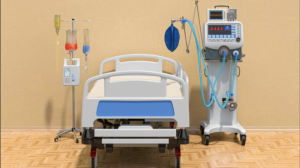
The respirator machine must have been very old. As you know, respirators these days are not that tall. Was it like an iron lung? You told Erika that “this one stood about seven feet high.”
It’s an amazing story, one that needs to be told to the world. But I can’t repeat the story without more details.
I have never received a reply from Norma Bowe.
Back to the journalist
After reading Junger’s book, I wrote again to Hayasaki:
Thank you, Erika. I bought Junger’s book, at your suggestion. It is a fascinating read. But it mentions nothing about Norma Bowe’s story.
Junger was not clinically dead. And he remains an atheist after that experience. Nor does he believe in an afterlife where the personality survives death. But he does say his “vision” leaves him open to the possibility of some kind of “after,” even if it is not personal. His story does not seem to match other NDEs and OBEs.
In any event, I am simply interested in researching Norma’s OBE story. I have sent three emails to her over the past few weeks. Maybe she is on vacation? Would you be able to nudge her? Tell her a reader is interested in learning more about the event she told you. I’m sure there is more to the story than just one person’s memory. So far, you are the only source I can find, and you seem to be reliable—and I assume you checked it out—but you are a secondary source.
Before I write about this, I want to check every possible source of information.
She did not reply. I sent her another email a few days later:
Erika,
I still have not heard from Norma Bowe. . . .
At this point, the only documentation I have of that 12-digit-number OBE is from your book. Did you investigate the story further?
Thanks for the book recommendation. I found Junger’s story to be fascinating.
I have a new book to recommend to you (to be released at the end of this month), written by a practicing neurosurgeon who has investigated such experiences:
Searching for Soul: A Brain Surgeon’s Exploration of Near-Death Experiences and Afterlife, by Vivekanand Palavali MD
I have not heard from Erika Hayasaki again. I was happy to read her book recommendation. I wonder if she read mine.
Palavali’s book, by the way, is an excellent scientific and medical investigation of NDEs. Norma Bowe said the patient was “clinically dead,” but Palavali questions the meaningfulness of that term. “I firmly believe the concept and expression of clinical death must be excluded in the world of medical terminology,” he writes. “As a practicing brain surgeon, I find the term ‘clinical death’ fundamentally flawed.”
You are dead or you are not. The adjective “clinically” is unclear. The ambiguity of the concept can lead people to jump to conclusions. “Patients who survived and were told that they were clinically dead perceive themselves to have actually died and come back to life,” Palavali writes.
Another source for the story?
The source that Habermas refers to, The Self Does Not Die, is out of print, but a used copy I ordered eventually arrived. It was published in 2016 by the International Association for Near-Death Studies, Inc. On page 35, the authors (one of whom is “paranormally gifted”) tell basically the same story that Hayasaki told, but their source is a documentary movie called Beyond The Light in which Norma Bowe is directly interviewed. I watched the movie (it is actually called Afterlife: Beyond the Light), and here is what Bowe said in that interview:
“I had a patient, as a matter of fact, when I was working in the neurology intensive care unit, and she had a closed head injury, and came into our unit with a coma, and pretty much stayed in a coma for several weeks. She was resuscitated probably four or five times in the emergency room. So she was clinically dead for a period of time.
“And when she started to come to, out of the coma, we took her off the life support systems. She started talking about floating up out of her body and being on top of the room, kind of looking down at everything going on. And I had heard that story before, so I was half listening. I was sort of thinking, ‘Oh, OK, here we go again, floating on top of the room.’
“But she had sort of an unusual circumstance because she was also obsessive-compulsive, and her thing was remembering numbers. So she started telling us that while she was floating on top of the room, looking down, that she memorized the serial number on top of the respirator. So I was a little more interested in that. You know, not only was it a mix of mental-health, near-death experience, but it just sounded kind of interesting, so I started talking to her more about it.
“And sure enough, you know, back then the ventilators were maybe seven feet tall from the floor, and she rattled off this number that was twelve numbers long. We wrote it down. We didn’t think much of it. The day came, though, that the respiratory therapist was going to take the machine out of the room because she didn’t need it any more, so we had the maintenance people come, dust off the top of the ventilator—he had to climb up on a ladder to get to it. He dusted off the top and rattled off the exact 12-number number. So, from that point on, I think I became a little more interested in what people had to say for those moments that they were actually clinically deceased.”
This appears to be consistent with what she told Hayasaki. When she mentioned the serial number, the cutaway went to a video of a respirator with a number on the front, not on the top. Also notice that she called it a respirator and a ventilator. Those are not the same thing.
In May, I sent this follow-up to Hayasaki:
Erika, (copy to Norma Bowe)
I have still received no reply from Norma Bowe about the story she told you. I have tried her Kean email and her “Be The Change” email, more than once.
I don’t doubt that you told the truth. I’m sure Norma told you a story about a woman who had an OBE and saw a 12-digit number on a respirator.
The Death Class is not technically a journalistic report or a news story, but you are identified as a reporter, journalist and professor of Literary Journalism, so I assumed you naturally would have verified the story before printing it.
A number of people are pointing to your book as proof of NDEs. So you have some responsibility.
When I asked you for verification, you simply directed me to Norma Bowe who, at this point, has not responded to my inquiries. (I hope she is not ill.) You also directed me to Junger’s book, which I bought, a wonderful book, but not directly relevant to Norma’s story. I am not asking about the broad picture here; I am simply asking about that one particular story, which (if verified) would add solid evidence for NDEs and OBEs.
I don’t need to tell you that journalists must verify. What facts did you uncover? These facts, as you know, would include things like:
When and where the event took place • What hospital • Patient name—how to contact her • Doctor/nurse/interns names • Name of maintenance worker who saw the number • Corroborating witnesses • Contemporary news stories about the event • What was the 12-digit number? • Does Norma still have the piece of paper that amazing number was written on? • What kind of respirator was it?
And so on . . .
I asked a couple of medical-equipment suppliers what kind of respirator would be seven-feet tall, and they could not think of anything besides those old coffin-like “iron lung” respirators that contain the patient, and they would have been horizontal, not vertical. The tallest floor respirators (on wheels) that I can see stand no more than 4-feet tall, and most are much shorter.
They told me it is possible the respirator could have been on a high shelf, but not so high that it couldn’t be easily moved to another room. Most respirators are portable, so a person could just pick it up or tilt it to see the top. (It was dusty, Norma says. Do hospitals only clean their rooms or equipment every few years? And if the maintenance worker could not read the number without dusting it off, how did the OBE patient read it?) But Norma told you that the respirator “stood about seven feet high.” Even at that height, you wouldn’t need a ladder. A tallish person could simply step on a small step-stool or chair to see it.
The medical-equipment suppliers also told me that it makes no sense to put a machine number that high, out of sight. They also told me that respirator serial numbers or model numbers include letters as well as numbers (such as TC‑84A‑X12345) to identify the manufacturer.
Perhaps Norma can explain this, but I am curious why you, a journalist, appear not to have checked it out before printing it. Did you check it out?
I hope there are good answers—because it’s a good story!—but if I don’t hear from you or Norma, I am going to print that since there are no confirming details, it appears likely you have reported an unverified story.
And that’s it. Hayasaki and Bowe seem to have ghosted me (if that’s an appropriate word in this context). Dr. Palavali also sent Bowe an email asking for details, and received no reply.
What have we learned?
So, where is Habermas’s touted “direct evidence” for the story? All we have is one person telling a decades-old second-hand report allegedly from an unnamed patient who said she saw a number during an OBE. Habermas says, “a nurse verified the story.” What story? The only story is the one the nurse herself told. We have no report from the patient. We don’t know her name. We have no news stories, no video, no photographs of the patient or the number on the respirator, no piece of paper with the number on it. Habermas’s footnote 79 says the story was “confirmed in an interview later” (presumably referring to the film where Nurse Bowe relates her story again), but the same person retelling the same story is not confirmation “by at least one other person.” It’s just self-verification.
Habermas says “others there” heard the story. How does he know that? Who were they, and where is their testimony? What is the name of the “other nurse” who wrote down the number, and where is her testimony?
Habermas writes that the volume “of these reports makes it exceptionally difficult for NDE naysayers.” But honest skepticism is not naysaying. It is only natural to be curious about a surprisingly extraordinary claim. I am eager to learn if such stories are true, and nonresistant to changing my mind if the evidence leads solidly in that direction. Skeptics are not naysayers. They are verify-sayers.
I don’t think Habermas or Copan or Hayasaki or Titus Rivas (one of the authors of The Self Does Not Die) are lying. They believe the story. The problem is that they claim the report has been verified when that has not yet been shown to be true.
I don’t know if Nurse Bowe is lying. She may be exaggerating, misinterpreting or misremembering. She may have heard the story from someone else. But we have to admit — given the lack of confirming evidence — that there is a nonzero probability she is not telling the truth. People fudge facts all the time. It would be irresponsible to take a tale like that at face value. Until she documents and corroborates her story, those of us who truly want to know have no choice but to withhold judgment, avoiding the temptation to jump to a conclusion that merely confirms our beliefs.
In The Age of Reason, Thomas Paine asked more than two centuries ago: “Is it more probable that nature should go out of her course or that a man should tell a lie? We have never seen, in our time, nature go out of her course. But we have good reason to believe that millions of lies have been told in the same time. It is therefore at least millions to one that the reporter of a miracle tells a lie.” Yes, but it could also be an innocent misinterpretation or exaggeration or false memory.
I would think Hayasaki’s lack of corroboration would be troubling to her, as a journalist. My wife Annie Laurie Gaylor has a degree in journalism and has been an editor and/or reporter for three newspapers. She tells me: “One of the foundational tenets of journalism is ‘Verify, verify, verify.’ If your mother says she loves you, check it out.” It appears Hayasaki told a story she did not check out. And now others1 take her unsubstantiated report as “directly confirmed” evidence for immaterial consciousness, suggesting that there is a soul that outlives the death of the body.
I don’t think the lack of verification of a particular OBE report disproves the existence of immaterial minds. It is possible that some other account might be corroborated, so we must remain open-minded. But even then, we must still ask if an immaterial mind (e.g., spiritual soul) is the best explanation for the observation.
There are excellent reasons for doubt. Dr. Palavali describes how people have been induced to have OBE and other NDE experiences with certain drugs and by electrical stimulation of the temporalparietal junction. And these people were not dying! (So NDE could also stand for “non-death experience.”) He writes that “true neuroscientists believe that mind is a function of brain, and so is consciousness,” and since the brain is material, it is incoherent to talk of an “immaterial mind.” But doubt is not certainty. I’m sure most of those neuroscientists would be willing to change their minds, as I would, in the face of convincing evidence.
The lesson to be learned from the lack of corroboration of the 12-digit story is not that souls don’t exist, but that some of us have a propensity to believe stories that have not been verified. Beyond that, loudly claiming that they have been verified looks something like confirmation bias. Or in this case, nonconfirmation bias.
———
1Besides Copan, Habermas and Rivas, other reports include: “Veridical Perception and the Near-Death Experience,” by Kevin Williams; Another Way In: “Near-Death Experiences” as an Apologetic, by Michael Zigarelli; “Near-Death Experiences and the Emerging Implications for Christian Theology,” by Michael Zigarelli; Reddit discussion
———
Dan Barker is co-president of the Freedom From Religion Foundation and author of many books, including Losing Faith in Faith: From Preacher to Atheist, Contraduction and Life Driven Purpose: How an Atheist Finds Meaning.
The post Is she out of her mind? appeared first on Freethought Now.
0 responses to “Is she out of her mind?”